[vc_row][vc_column][vc_column_text css=””]December 11, 2025
Artificial Intelligence (AI) is a popular topic nowadays, and for good reason. With its rising advancements, many of us may feel nervous about its potential. Not to mention, it can leave behind learners who are already struggling with basic digital literacy skills, making the digital world harder to navigate. Though, there are also positives about AI, such as making learning more accessible.
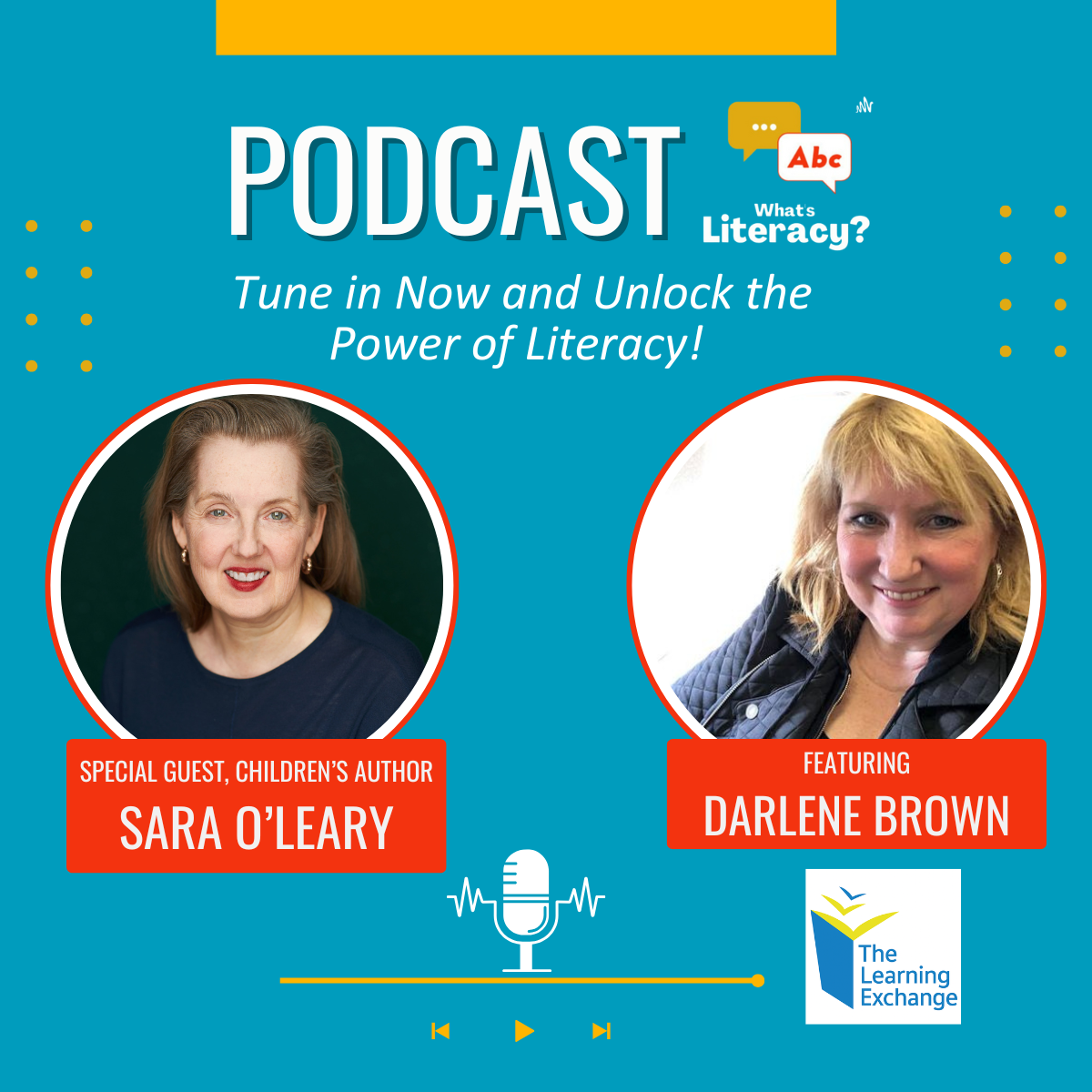
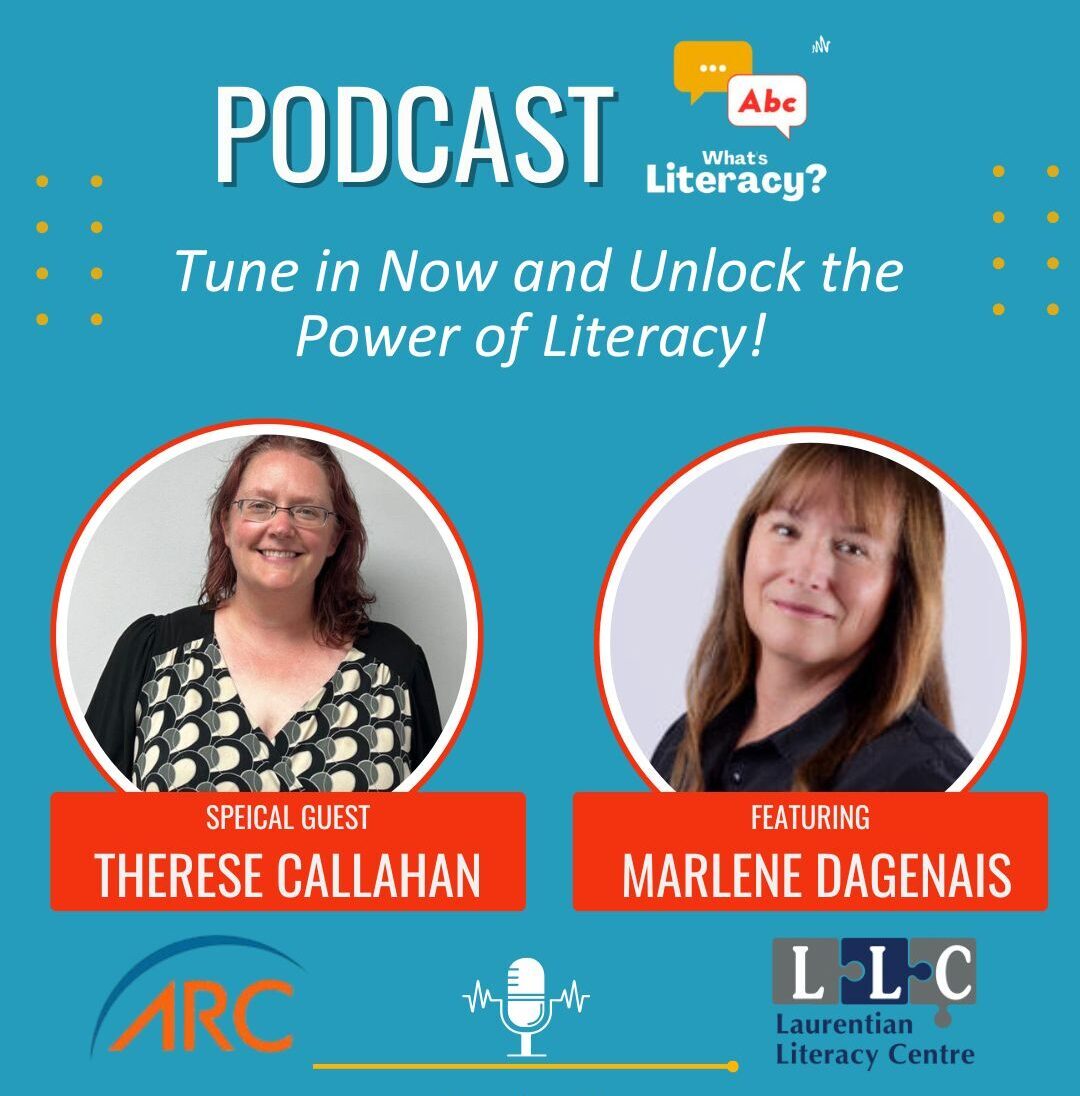
In the latest episode of the What’s Literacy? Podcast, Dan Laxer speaks with Charlotte Nurse, Director of Programs at Canada Learning Code, a not-for-profit organization that brings accessible computer science to communities across Canada. They talk about what AI really is, how it works, and how we can use it responsibly and effectively, such as a tool to enhance learning.
Plus, get to know two of our members! Dan chats with Greg Graham from Western Quebec Literacy Council and Angelina Leggo from Eastern Quebec Literacy Council about their organizations’ programs, challenges, successes, and more.
Part 1: A Conversation with Charlotte Nurse from Canada Learning Code
What is AI?
AI can do a lot. It can generate text, summarize content, translate, and even create images. Though, this does not mean it thinks like a human being. “AI is just prediction modeling,” Charlotte explains. “It’s taking in a ton of information. It’s seeing patterns, which is just math at the end of the day, and then making predictions based on those patterns. There’s no critical or creative thinking. Even generative AI can create brand new content, but it’s based on information it’s been trained on.”
Why AI Literacy Matters
Being AI literate means understanding what AI can and can’t do, as well as how to use it in ways that align with our values. For many learners, such as busy adults returning to school or those who have limited access to resources, AI can:
- Make content more accessible by converting text into audio or simplifying complex language.
- Support language learners with grammar checks, translations, and phrasing suggestions.
- Boost productivity for everyday tasks such as email drafts, document summaries, and scheduling.
- Create a low-stakes learning environment where individuals can ask questions without fear of judgment.
Practical AI Uses in Adult Learning
Charlotte offers classroom-friendly uses for AI that support learning rather than replace it.
- Explain a Question: If a test question is wordy or confusing, a learner can ask AI to rewrite the question in plain language or at a lower grade level.
- Summarize Documents: Long articles or complicated texts can be summarized at a lower grade level so main ideas are easier to understand.
- Text to Speech: Learners with dyslexia or visual challenges can listen to textbooks and articles as audio to support comprehension.
- Writing Support: AI can suggest grammar corrections, reword sentences, and help structure essays or job applications.
- Prompt Learning: Instead of asking for answers, learners can ask AI to guide them through steps, suggest resources, or propose practice activities.
Safeguards and Responsible Use
Introducing AI into learning requires guardrails. Some ideas to keep AI use responsible and helpful include:
- Set parameters on tools so they refuse to give direct answers on assessments and instead explain the question.
- Teach learners how to verify AI outputs and spot common errors.
- Emphasize human oversight: AI output needs review by an instructor or learner before using it.
- Discuss values and consent around data, privacy, and energy usage so learners can make informed choices.
Part 2: A Conversation with Greg Graham from Western Quebec Literacy Council (WQLC)
In Western Quebec, Greg Graham leads a not-for-profit literacy organization that, for over 41 years, has offered free tutoring and support to English-speakers. His council serves the Outaouais region, which is so vast that Greg describes it as “about the same size as Belgium, or slightly smaller than Slovakia.”
Overview of Programs
Volunteers work with adults on reading, writing, numeracy, and digital skills in both one-on-one and/or group sessions. For one-on-one sessions, volunteers are trained and then matched with a learner, with the two meeting regularly in a public place, such as a local library. Group sessions take place at adult education centres, facilitated by the council’s strong partnership with the Western Quebec School Board. The council also runs:
- Family Activity Clubs: An afterschool program at 6 different elementary schools. Children and parents partake in fun activities that are literacy-based to inspire lifelong learning. Children also get to leave with free books!
- Digital Learning Cafés: Includes two drop-in centres where people receive help navigating digital technology.
- Reading Groups in CHSLD’s (Long-term Care Homes): Volunteers read to seniors who may no longer be able to read independently.
Challenges and Successes
Geography is a huge challenge. Serving such a vast territory means villages are hours apart, making it difficult to match volunteers with learners who are close to them. “It’s not just about having enough volunteers,” Greg explains. “It’s also about having volunteers in the right places.” Another challenge is tight funding, made more difficult when volunteers must travel long distances. “Covering travel costs adds up in a big way,” Greg notes. Though, the council has also begun uploading learning materials online to make it easier for both learners and volunteers to access resources.
A big success is seeing former learners become tutors. “They were part of receiving some help, and now they’re passing it along,” Greg says. “That happens way more than I realize.” Partnering with local community groups is also a big success for the council, as this increases their reach and impact. Greg says the last thing he is most proud of is the high education and experience of his staff, whose passion and skills really make a difference for the communities they serve.
Greg takes pride in the council’s accomplishments despite their limited resources. “It has just been amazing,” Greg says. “The fact that we can do so much with so little.”
Part 3: A Conversation with Angelina Leggo from Eastern Quebec Literacy Council (EQLC)
In Eastern Quebec, Angelina Leggo leads a community-based literacy council that provides free literacy tutoring and services to English-communities in Bas-Saint-Laurent, Gaspésie, Côte-Nord, and Îles de la Madeleine. “Our mission is to help guide people in understanding what literacy is and how it affects their lives,” Angelina explains. “We’re also here to help them reach their personal goals.”
Overview of Programs
The Eastern Quebec Literacy Council offers many programs, including:
- One-to-one Tutoring: A volunteer provides literacy support to an adult learner. This includes improving one’s reading and writing skills, digital literacy skills, and even some financial literacy skills. The council is looking to adapt this program so it can be delivered in adult education centres and some high schools.
- Digital Literacy Program: Includes a travelling drop-in table at partner events. Within the events, the council provides a space for people to bring their questions about digital technology. Some examples include assistance with using one’s device (e.g. smart phone, tablet, etc.), help accessing online forms, and more.
Challenges and Successes
The biggest challenge is the size of their territory. They cover 21 Regional County Municipalities (RCMs), making it difficult to reach as many communities as they’d like. Though, creating partnerships with organizations who also serve English-speakers in these territories has helped the council navigate this challenge. “Last year was the first time in our history where we went in person to each of our five major areas,” Angelina says.
Another challenge is getting books into readers’ hands. Angelina notes that there aren’t many places for people to buy books, with libraries basing their spending on the percentage of the population. With a small English-speaking population, it can be challenging to get a wide selection of books. To navigate this challenge, the council builds personal libraries and tries bringing in more English books into the region. They keep a free library outside of their office, open to the public. “The big dream is to build seven more of these and put them throughout the territory,” Angelina says.
This year marks the council’s 45th anniversary. “We’re working on growing our volunteer base and reaching new learners,” Angelina says. “That’s what our focus is on for this year and coming years.”
Get Connected
Canada Learning Code website: https://www.canadalearningcode.ca/
Western Quebec Literacy Council: If you’re looking to improve your literacy skills or would like to volunteer, contact WQLC at 1-888-647-3112, email them at info@wqlc.org, or visit their website: https://www.wqlc.org/
Eastern Quebec Literacy Council: If you’re looking to improve your literacy skills or would like to volunteer, contact EQLC at 418-368-5611, email them at info@eqlit.ca, or visit their website: https://eqlit.ca/[/vc_column_text][/vc_column][/vc_row]